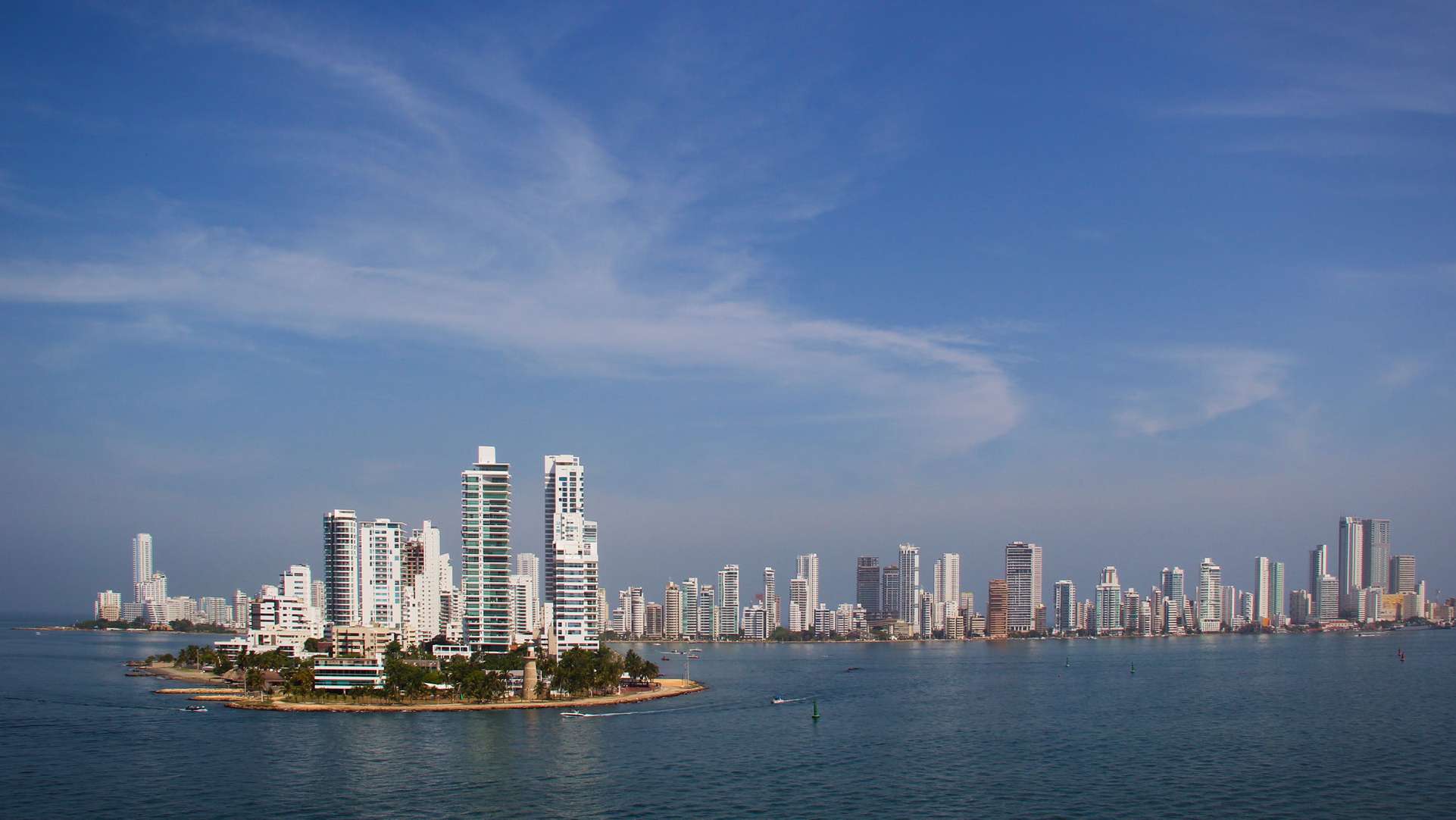
The Colombian Caribbean is entering a new economic chapter
For decades, the international image of the Colombian Caribbean has been relatively easy to define: Cartagena, colonial architecture, beaches, music and tourism. That image is still important, but it is increasingly incomplete.
A broader economic story is beginning to emerge around the region, involving infrastructure, logistics, foreign investment, tourism, energy, technology and the development of new economic centres. That was one of the underlying themes of Foro Caribe 2026, held by Forbes Colombia in Barranquilla on 26 August. The forum brought together business leaders, investors, institutions and experts to discuss the Caribbean not simply as a tourism destination, but as a potential logistics, industrial, commercial and innovation hub connecting Colombia with international markets.
From individual cities to a Caribbean economic corridor. The future of the Colombian Caribbean cannot be understood only through individual cities competing independently. Barranquilla, Cartagena, Santa Marta and the surrounding coastal areas have very different — and increasingly complementary — economic profiles. The analysis following Foro Caribe argues precisely for this approach: connecting the strengths of Atlántico, Bolívar, Magdalena and the other Caribbean departments rather than treating them as isolated economies.
Barranquilla has strengthened its position as a business and industrial centre. ProBarranquilla reports that in 2025 it supported 23 investment projects worth approximately US$450 million, generating more than 3,900 direct jobs, and managed 35 strategic events representing more than US$45 million in economic impact. At the same time, the region still faces structural challenges: preliminary DANE figures cited by Forbes show the Caribbean economy grew 1.6% in 2025, compared with 2.6% nationally. Atlántico grew 2.6% and Bolívar 2%, while other Caribbean departments contracted. This is not a story of a region whose transformation is complete. It is a region in transition — and from an investment perspective, transitions are often where the most interesting conversations begin.
Tourism is becoming an economic engine. According to Colombia's Ministry of Commerce, Industry and Tourism, the country received more than 24 million non-resident visitors between August 2022 and mid-2026, including 14.8 million foreign visitors, with tourism generating approximately US$34.43 billion in foreign currency through December 2025. In July 2025, Cartagena accounted for 17.5% of international visitor arrivals to Colombia, behind only Bogotá and Medellín, and Cotelco-affiliated hotels in the city recorded average occupancy of 67.6% across 2025. But Cartagena itself may only be part of the opportunity.
Why the Cartagena–Barranquilla corridor deserves attention. At one end of the corridor sits Cartagena: an established international tourism destination with global recognition. At the other, Barranquilla: an increasingly important business, industrial and services centre. Between them stretches a coastline at a substantially different stage of development. Mature destinations offer established infrastructure and proven demand. Emerging areas offer the possibility of participating in the development of a destination before it reaches the same maturity — with the greater uncertainty that comes with it. The more interesting thesis is structural: can increased tourism, international connectivity, infrastructure, hospitality and residential development gradually create new destinations along the Caribbean corridor?
Real estate is only one part of the transformation. Much of the Foro Caribe agenda was not about tourism at all: renewable energy, industrial development, healthcare and wellness, innovation, digital transformation, logistics and regional competitiveness. Successful destinations rarely develop because someone simply builds apartments. They develop when multiple layers begin reinforcing one another: connectivity → tourism → hospitality → services → employment → residential demand → investment → infrastructure.
And this is where Villa Mediterráneo fits. The project is being developed precisely within this emerging corridor — not as the reason the Colombian Caribbean is developing, but as one example of the type of destination emerging within that transformation. Conceived across four phases, it brings together residential living, hospitality, gastronomy, leisure and resort infrastructure: nearly 1 km of coastline, more than 70 resort-style amenities, and architecture developed with Villarroel Torrico, the studio whose portfolio includes work at Puente Romano in Marbella. And importantly, it sits outside the already mature Cartagena market.
The Colombian Caribbean comes to the Netherlands. On 18, 19 and 20 September 2026, Villa Mediterráneo will be presented at Second Home Expo at Brabanthallen, Den Bosch — Stand 7-323. European second-home buyers know Spain and Portugal, and many know established Caribbean markets. The Colombian Caribbean is still a discovery, and perhaps that is precisely what makes this moment interesting. I'll be there throughout the three days; if you're attending, I'd be delighted to meet you personally.