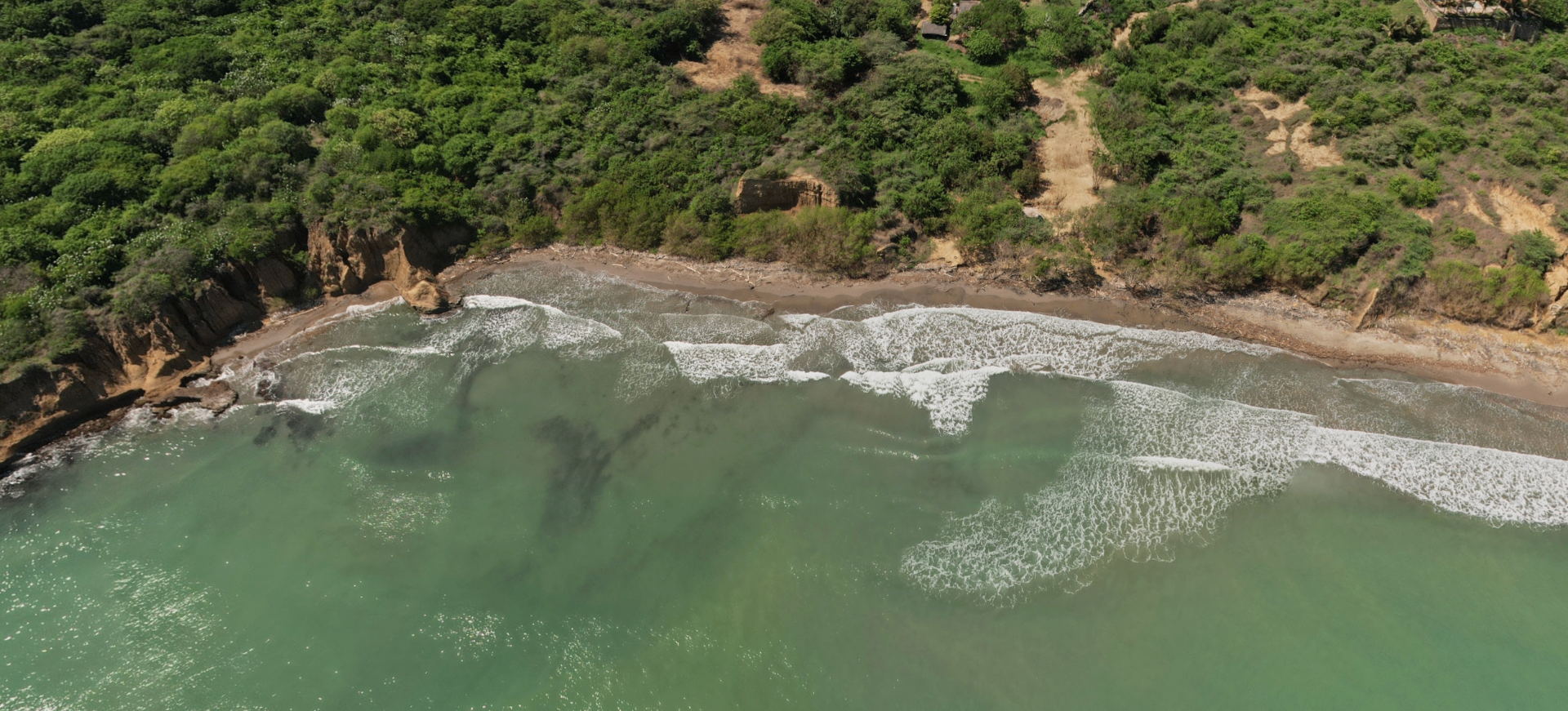
The Coastal Corridor Between Cartagena and Barranquilla: A Structural Opportunity
Cartagena is expanding north. Barranquilla is expanding toward the coast. Between them, a coastal corridor is beginning to take shape — not as a speculative concept, but as a direct consequence of urban growth patterns already in motion.
This emerging stretch of coastline represents one of the most compelling early-stage real estate opportunities in the Colombian Caribbean today.
Cartagena: A Mature and Premium Market. Cartagena de Indias has consolidated its position as one of Latin America's most established luxury destinations, with a real estate market that reflects both international demand and limited supply in prime areas.
In the Centro Histórico, top-tier assets can reach up to COP 12,000,000 per m² (≈ €2,600+/m²), driven by scarcity, tourism demand, and heritage value. Prime residential areas such as Castillo Grande and Bocagrande typically trade within the range of €1,500 to €1,900/m². Further north, in the master-planned expansion corridor, new-build pricing commonly ranges between €2,100 and €3,100/m².
This is characteristic of a maturing market: pricing reflects both existing infrastructure and forward expectations. Early-stage upside has largely been captured, and current investment is increasingly yield- and stability-driven.
Infrastructure as a growth catalyst. Rafael Núñez International Airport is undergoing expansion from approximately 7.7 million to 11 million passengers annually, with financing secured. A second airport project in the Bayunca corridor is under evaluation, with a projected capacity of up to 17 million passengers, directly connected via the Vía al Mar. KLM's direct Amsterdam–Cartagena route strengthens European accessibility. The Inter-American Development Bank (IDB) has selected Cartagena as the first Latin American city to access a new $1 billion credit line for sustainable urban development.
The corridor: where growth continues. While Cartagena represents a consolidated market, its direction of expansion is equally important. Simultaneously, Barranquilla — one of Colombia's fastest-growing urban economies — is extending its footprint toward the same coastline. The result is a converging growth dynamic along the coastal hub connecting both cities.
Villa Mediterráneo: early positioning within the corridor. Located approximately 40 minutes from Cartagena and 35 minutes from Barranquilla's international airport, Phase 1 is currently offered at pre-construction pricing starting from approximately €1,500/m², with average unit pricing remaining below comparable levels observed in Cartagena's northern expansion zones. This pricing differential reflects timing rather than location quality.
The project combines elements typically associated with more mature resort markets: 1 km of private beachfront, a master-planned development including marina infrastructure, architecture by Villarroel Torrico (Puente Romano in Marbella), and a marina designed by Ronáutica.
Investment perspective: timing and scarcity. Coastal real estate markets are inherently constrained by finite supply. When urban expansion converges toward the coastline, the sequence of value creation tends to follow a predictable pattern: infrastructure improves, early-stage developments enter at discounted pricing, market recognition increases, and pricing converges toward established benchmarks. Phase 1 comprises 133 units, with entry pricing from approximately €285,000.
Cartagena demonstrates what a fully recognized coastal market looks like. The corridor between Cartagena and Barranquilla reflects where that recognition is likely to extend next. Cartagena offers stability and maturity; the corridor offers asymmetry and early positioning. Both have a role within a diversified strategy. The difference lies in timing.